2. The Choice between śreyas and preyas
श्रेयश्च प्रेयश्च मनुष्यमेतस्तौ सम्परीत्य विविनक्ति धीरः ।
श्रेयो हि धीरोऽभि प्रेयसो वृणीते प्रेयो मन्दो योगक्षेमाद्वृणीते ॥ २ ॥
śreyaśca preyaśca manuṣyametaḥ tau samparītya vivinakti dhīraḥ |
śreyo hi dhīro’bhi preyaso vṛṇīte preyo mando yogakṣemādvṛṇīte || 2 ||
Word-by-word meaning:
śreyaḥ ca preyaḥ ca – śreyas and preyas; etaḥ manuṣyam – approach the human being. tau samparītya – Having very clearly considered them; dhīraḥ vivinakti – the discriminative (person) distinguishes (them). hi dhīraḥ – Indeed, the discriminative one; abhivṛṇīte śreyaḥ – chooses śreyas; preyasaḥ – rather than preyas. mandaḥ – The indiscriminate one;
vṛṇīte preyaḥ – chooses preyas; yogakṣemād – for the sake of acquisition and preservation.
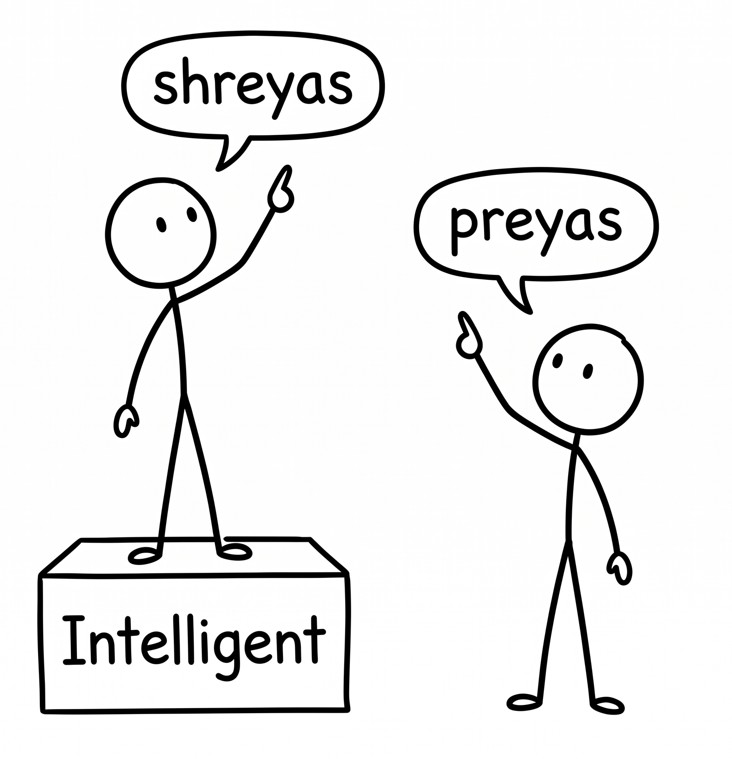
Translation:
śreyas and preyas approach the human being. Having very clearly considered them, the discriminative (person) distinguishes (them). Indeed, the discriminative one chooses śreyas rather than preyas. The indiscriminate one chooses preyas for the sake of acquisition and preservation.
Explanation:
- The Human Conflict of Choice: Swamiji explains that the paths of both śreyas (spiritual goal) and preyas (material goals) constantly present themselves to humanity. Because human beings are uniquely endowed with free will, they have the ability to choose between these two paths, and this very choice creates a conflict in their lives.
- The Delusion of the Unintelligent: For those who lack sufficient intelligence (manda-buddhīnām), these two paths do not appear distinct. Instead, they appear mixed up and confused, both in terms of the means to be employed and the ultimate results they yield.
- The Vision of the Discriminative Person (dhīraḥ): An intelligent, discriminative person thoroughly inquires into these paths. Just like the mythological hamsa bird is able to separate milk from water, the dhīraḥ successfully distinguishes the superiority of śreyas and the inferiority of preyas. This person understands that karmaphalam (the results of material actions) carries three inherent defects: pain, dissatisfaction, and attachment. Knowing that true fulfillment cannot be found in material objects, the discriminative person chooses śreyas (self-knowledge) over preyas and leaves the responsibility of acquiring and protecting possessions (yogakṣema) to the Lord.
- The Trap of the Indiscriminate Person (mandaḥ): Conversely, a dull-witted individual (mandaḥ or avivekī), due to an incapacity to discriminate, is naturally drawn to preyas. The ignorant person chooses material pursuits strictly for the sake of acquiring and preserving worldly things (yoga-kṣemāt) such as the physical body, progeny, and wealth. Consequently, they spend their entire life focused on protecting these fleeting possessions and find no time to lead a spiritually worthy life.